資料來源#
摘要#
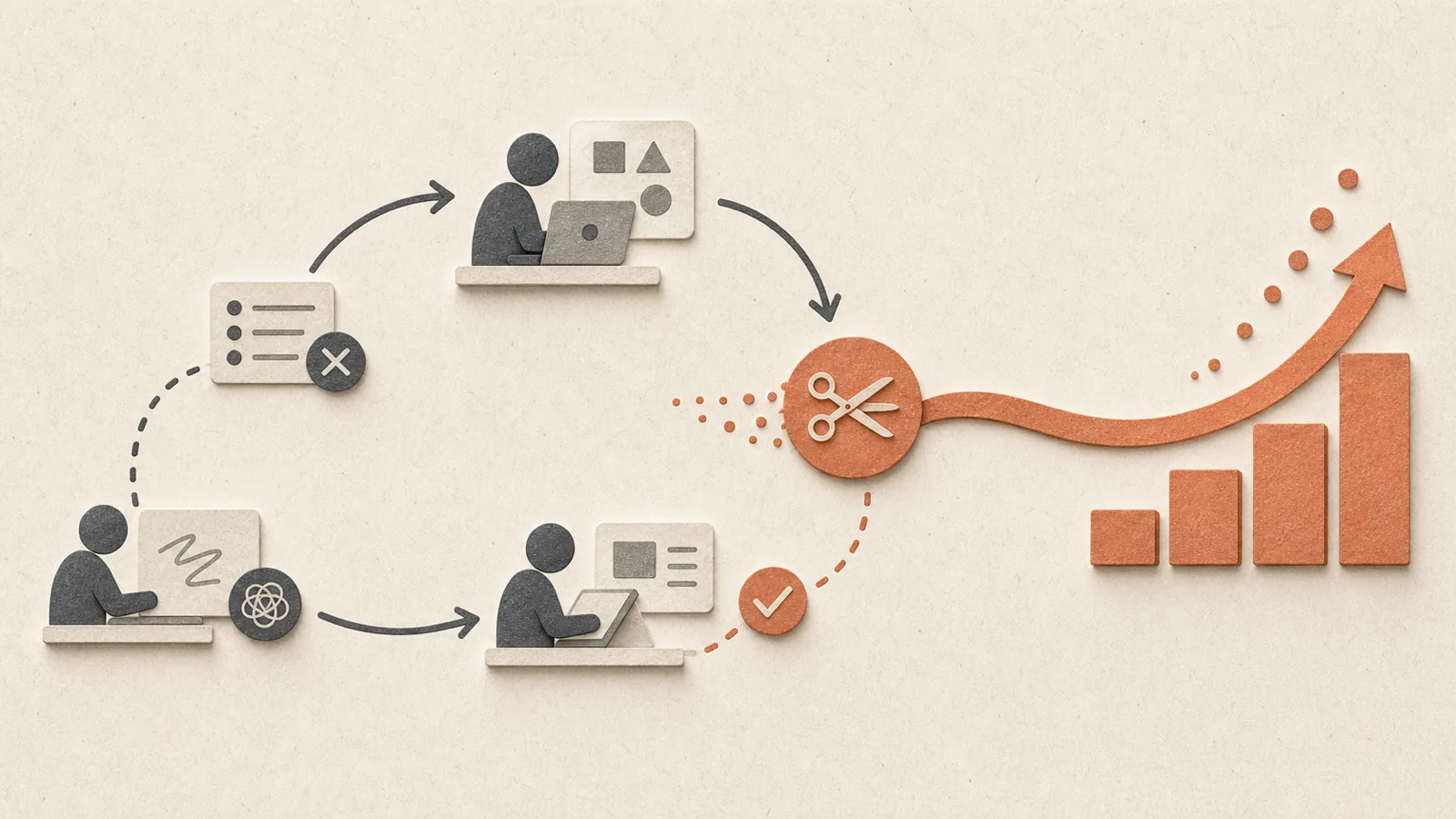
Dan Carey 描述了 Claude Design 背後的營運引擎:一個基本的建置循環——與使用者交談 → 設計功能 → 交付程式碼 → 閱讀回饋 → 重複——在十週內執行了「大約 50 到 100 次」,而且循環中的每個重複步驟都經過積極最佳化或自動化。團隊對每個步驟都會問的核心問題是:*「為什麼要做 Claude 能替你做的工作?為什麼還沒打造自己的工具?」*效益會層層累積:從循環中移除的任何阻力,都等於移除了 50 到 100 次,因此成本低廉的內部工具——許多只花一個下午打造——累積成推動三人團隊在十週內交付產品的速度。Carey 明確指出,具體的循環並不重要(「如果你在做硬體,這就不是適合你的循環」);真正可轉移的是把自己的迭代循環視為最佳化對象的思維方式。
為什麼最佳化會產生複利#
減少規劃阻力(以原型取代 PRD,Prototype Over PRD)和協作阻力(精簡團隊,Engineer PM Convergence)就能讓你「相當快」。更上一層的做法,是最佳化其他每個步驟:
「你在循環上做的每一點最佳化,只要你在一個專案中執行它 50 到 100 次,就會帶來回報。」
這是精實新創循環加上 AI 原生的轉變:打造用來最佳化循環的工具,成本已大幅降低。推動行動的問題不再是「我們負擔得起打造這個內部工具嗎?」而是「為什麼我們還沒打造?」
四個步驟,每個都加上儀表#
與使用者交談——讓這件事變得極其簡單#
「我們都是人。人會做容易的事。」因此團隊移除了與使用者交談時每一絲阻力:建立所有產品使用者都在其中的共用 Slack 頻道,大力推動內部自家試用。接著在對話之後(絕不介入對話之間)加入 Claude 作為分析層:Claude 讀取每段客戶對話,找出其中的共通點——因為兩位隊友可能分別從不同使用者那裡聽到相同建議,否則永遠不會把兩者連結起來。「對話是由我們來進行……但我們讓它負責所有分析。」
設計功能——使用自己的工具#
自行託管:「我們想用 Claude Design 來設計 Claude Design。」這是最純粹的自家試用案例(參見 Dogfooding as Product Discipline)。多人協作(即時共同編輯)等功能,直接源自觀察自身工作流程中的阻力,之後成為產品第一個由使用者提出的功能。
交付程式碼——消除交接阻力#
交接給 Claude Code 的功能之所以存在,是因為團隊總得在不同工具之間重新輸入長時間 Claude Design 對話中累積的所有背景資訊,才能把設計投入正式環境。他們把自身遇到的阻力自動化;這成了使用者第二常要求的功能(「那我要怎麼把它放進正式環境?」)。
閱讀回饋——打造你正在等的工具#
產品推出時,團隊收到的回饋多到沒有任何一個人讀得完。因此他們花一個下午打造了回饋聚類工具(「這不是我們打算等待的事情」)。現在 Claude 會先處理所有收到的回饋:將回饋與系統監控指標和追蹤資料比對、尋找趨勢、進行初步錯誤分析、提出修正建議,並提供按鈕,讓人直接把建議送進開發工具——每一項新增功能,都是先前由人手動完成的一個步驟。
「直接打造」——按需提供內部工具#
Carey 第二個「明天就試試」的行動,正是本文主旨的直接指引:
「挑一件你一直在等的事……花一個下午直接把它打造出來。大家都在等工具,但到了現在,內部工具……打造起來很快。去解決你自己的痛點吧。它很快就會回本。」
這與 Problem-Solution Fit Discipline 提到的相同經濟效益(「一個下午做出原型」),只是應用在內部工具上;這也說明了為什麼 Cat Wu 提到 Anthropic 團隊會打造「供個人化工作流程使用的自訂內部應用程式」。
緊密循環也能迅速抓出錯誤決策#
反覆執行循環的另一項效益,是能很快發現自己錯了。團隊推出進階的像素級控制功能,深受熱情的重度使用者喜愛,後來卻發現「其他所有人都討厭它們」,於是把功能移除了。總共只花了一週。「如果我們採用季度開發週期……就會整整一季都偏離方向。」Carey 得出的教訓不是「永遠要快」,而是「永遠要用夠短的週期迭代,才能迅速發現自己何時做錯」——把進行實驗的紀律應用在產品推出之後;而產品工藝的結論是,工具應該為所有人提升下限,而非只為重度使用者拉高上限(參見 Claude Design)。
延伸閱讀#
- Polish No Longer Signals Readiness — 快速產出精緻探索成果的速度,可能讓人對看起來像正式產品的原型過度錨定
- Dan Carey — 闡述這套紀律
- Claude Design — 以這種方式打造的產品;其許多功能都是循環最佳化的結晶
- Prototype Over PRD — 規劃步驟的最佳化;本文把相同思路套用到其他每個步驟
- AI Native Product Cadence — 這個循環所在的團隊與流程節奏;Carey 是支持這套做法的第二個 Anthropic 案例
- Dogfooding as Product Discipline — 「與使用者交談,讓這件事變得最簡單」和「使用自己的工具」都是自家試用;Claude 輔助的對話分析則是規模化的做法
- Product Velocity as Moat — 徹底最佳化循環帶來的外部效益:週五到週一交付 62 項改進;速度成為差異化優勢
- Problem-Solution Fit Discipline — 緊密循環讓你能在一週內發現錯誤決策(重度使用者控制項),不用等上一季
- Build for the Next Model — 持續執行循環的另一個理由:下一次模型發布會補上工程能力無法彌補的缺口
- Managers as ICs — 打造自己的工具,前提是每個人都會寫程式;以 IC 為主的扁平組織就是其基礎
- Harness Shrinkage as Models Improve — 隨著模型原生地承接更多步驟,循環中的內部工具會縮減或改變
- Agent Quality Flywheel — 將代理程式開發中的閱讀回饋/修正步驟產品化:Google 將評估、分析、修正做成可安裝的循環,正是「為什麼還沒打造自己的工具?」的廠商版本
尚待解答的問題#
- 這個循環假設團隊本身就是(或接近)使用者。當使用者和建造者不同,而且「與使用者交談」無法在同一個空間進行時,這種複利優勢還能保留多少?
- 值得打造的內部工具與無止境的小事之間,界線在哪裡?Carey 設定的「一個下午」門檻是判斷準則,但 Cat Wu 警告,過度客製化設定「會變成干擾」。
- Claude 負責第一輪處理所有回饋,會不會漏掉未形成群聚的罕見訊號?自動化分類能最佳化常見情況;令人意外的決策往往來自少數案例。
資料來源#
Cited by 15
- Claude Design×3
A product from Anthropic Labs that lets you collaborate with Claude to create polished visual…
- AI Native Product Cadence×2
Compounding Loop Optimization — the per-loop optimization discipline that powers the cadence
- Anthropic Labs×2
Ship daily; don't predict the future. "We do not try to predict the future… we ship, we watch, we…
- Build for the Next Model×2
Compounding Loop Optimization — the loop that validates product shape while capability gaps wait…
- Dan Carey×2
Optimize the whole loop. "Why are you doing this work that Claude could do for you? Why haven't you…
- Prototype Over PRD×2
"All we knew is that we had a spark." Removing these is what Compounding Loop Optimization frees up…
- Agent Quality Flywheel
Compounding Loop Optimization — the same instrument-every-recurring-step discipline, productized…
- Dogfooding as Product Discipline
Compounding Loop Optimization — "talk to users, make it the easiest thing in the world" is…
- Engineer PM Convergence
Compounding Loop Optimization — the small, role-dissolved team is what makes "build your own…
- Managers as ICs
Compounding Loop Optimization — "build your own tooling" presumes everyone can code; the flat,…
- Product & Organization
Compounding Loop Optimization — Dan Carey's discipline of instrumenting and automating every…
- Open Questions Backlog
Compounding Loop Optimization ×3 (oldest 120d) — The loop assumes the team is (close to) the user.…
- Polish No Longer Signals Readiness
Compounding Loop Optimization — the speed that produces polished explorations fast enough to…
- Problem-Solution Fit Discipline
Compounding Loop Optimization — tight, many-times loops are how Claude Design discovered a wrong…
- Product Velocity as Moat
Compounding Loop Optimization — the internal engine behind sustained velocity: Dan Carey's Claude…
Related articles
- AI Native Product Cadence
Cat Wu's 6mo→1mo→1day cadence at Anthropic: research-preview branding, mission-as-tiebreaker, evergreen launch room, li…
- Build for the Next Model
Prototype the thing that almost works, not the thing that already works: bet that the next concrete model release (not…
- Claude Design
Anthropic Labs product for collaborating with Claude on polished visual artifacts — designs, prototypes, slides, decks,…
- Prototype Over PRD
Dan Carey's prototype-replaces-PRD method: record a why-not-what conversation, transcribe it, hand the transcript to Cl…
- Evals as Product Spec
Cat Wu's framing of evals as the emerging core PM skill: ten great evals beats a hundred mediocre; encode what done loo…