資料來源#
- Anthropic's Boris Cherny: Why Coding Is Solved, and What Comes Next
- CS329A Self-Improving AI Agents — Part 1: Course Overview
- Full Walkthrough: Workflow for AI Coding — Matt Pocock
- How Anthropic's product team moves faster than anyone else | Cat Wu (Head of Product, Claude Code)
摘要#
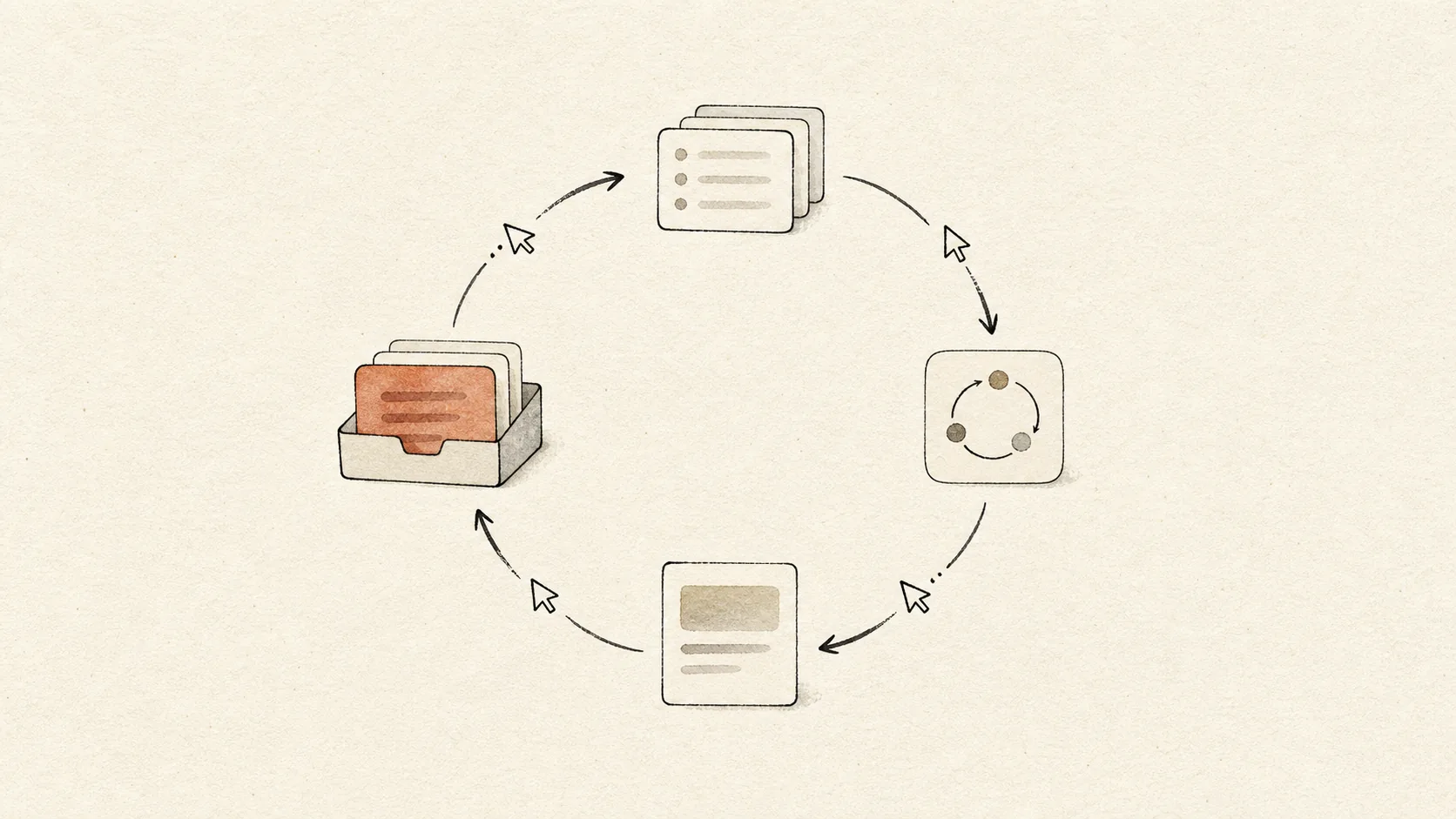
迴圈是一種代理程式流程,會重複執行提示,直到佇列清空或達到停止條件。到 2026 年年中,有三種逐漸匯聚的實作方式顯示,迴圈正成為與單次工作階段同等地位的基本原語:Anthropic 的 /loop 斜線指令(依 cron 排程、重複執行)、Anthropic 的例行程序(伺服器端的 /loop),以及 Matt Pocock 的 Ralph Wiggum 迴圈(以 bash 搭配 claude --permission-mode accept-edits 在 while 迴圈中執行)。Boris Cherny 稱迴圈是「未來」;Matt Pocock 則以迴圈作為端對端工作流程中 AFK 執行的骨幹。
兩種迴圈#
依 cron 排程的迴圈(/loop、例行程序)#
用於 Claude Code 和 Cowork。運作方式:代理程式呼叫 cron(透過工具)排定未來時間的工作;到時,該工作會帶著執行任務的指示重新進入代理程式。排程可以重複執行(每分鐘、每 5 分鐘、每天)。
Boris Cherny 提到的用途:
- 看顧 PR — 修復 CI、自動 rebase
- 維持 CI 健全 — 修復不穩定的測試
- 每 30 分鐘彙整一次 Twitter 回饋
- 「任何時候都有數十個迴圈在執行」
- 夜間:「幾千個代理程式」執行較深入的工作
例行程序是在伺服器上執行的相同基本原語,因此即使闔上筆電也會繼續運作。
清空待辦清單的迴圈(Ralph Wiggum 迴圈)#
由 Matt Pocock 等人使用。運作方式:Shell 指令稿以固定提示執行代理程式,提示指示它從待辦清單挑選下一項任務並完成,然後指令稿重新啟動。待辦清單是由 Markdown 問題檔案(或 GitHub issues)組成的目錄。
Pocock 的 once.sh 骨架:
issues=$(cat issues/*.md)
recent_commits=$(git log -5 --oneline)
prompt=$(cat prompt.md)
claude --permission-mode accept-edits "$prompt" --context "$issues" "$recent_commits"
「迴圈」包裝器只會不斷重新執行 once.sh,直到代理程式輸出哨兵字串(no more tasks),或由 harness 停止它。
提示會強制採用僅限 AFK 的任務選擇——只有標記為 AFK(而非 human-in-loop)的任務才符合資格。
迴圈為何重要#
- 將規劃成本分攤到多次執行。 一次仔細的規劃工作階段(例如透過 Design Concept Grilling)建立 Kanban 待辦清單(見 Vertical Slice Tracer Bullets);迴圈可在不需人類進一步輸入的情況下清空清單。
- 讓需時數小時的任務變得可行。 迴圈將工作拆分成許多全新的工作階段,而非塞進一個巨大的上下文視窗;每次都能維持在 Context Window Smart Zone 內。
- 平行化。 彼此獨立的待辦項目會同時在不同沙箱中執行。Pocock 的 Sandcastle 函式庫透過 Docker 容器中每個 issue 專屬的 git worktree 來完成這件事;之後由合併代理程式負責整合。
- 利用閒置運算資源。 Boris 的夜間設定是在便宜的閒置時段執行上千個代理程式的迴圈——這些工作不值得人類花整個晚上處理,但以代理程式的成本執行卻能創造價值。
AFK 與 human-in-loop 任務#
Matt Pocock 的關鍵區分:
- AFK 任務 — 實作、重構、測試架構、文件整理、修復 CI。代理程式不需要逐步取得核准也能成功;驗證是自動的(測試、型別、linter)。
- Human-in-loop 任務 — 對齊、設計選擇、排定優先順序、QA。這些任務沒有機械式驗證方式,需要品味與默會脈絡。
迴圈適用於 AFK 類任務。試圖讓 human-in-loop 工作進入迴圈會造成偏離——代理程式會做出看似合理但實際錯誤的判斷,並不斷累積。
驗證能力是上限#
Pocock 更進一步主張:回饋迴圈的品質決定迴圈能力的上限。 沒有良好的測試、型別和 linter,迴圈就等於「盲目寫程式」。Agent Harness Engineering 也提出相同觀點,指出機械式強制執行的重要性——迴圈只是讓代價更明顯,因為沒有人能及時發現偏離。
與模型發展軌跡的關聯#
Boris Cherny 表示,Opus 4.7 會在沒有提示的情況下自發啟動迴圈:
「我會跟它說:『去查詢這筆資料。』然後它會說:『嘿,我注意到資料會隨時間變動。我會啟動一個迴圈,每 30 分鐘給你一份報告。』」
這符合 Harness Shrinkage as Models Improve 的說法——過去需要由 harness 注入的能力,逐漸成為模型的自然行為。迴圈原語仍然存在,但使用者不再需要主動呼叫它。
2025 年底的基準:迴圈當時是例外,還不是預設做法#
值得記錄這個時間點,因為本頁的來源都來自轉變的另一端。Stanford 的 CS329A 第 1 講(CS329A Self-Improving AI Agents — Part 1: Course Overview,於 2025-09-22 授課,practitioner-opinion)對迴圈的定義與本頁相同——目標、計畫、對環境採取行動、回饋、修正,以及決定何時停止(或回頭說明目標無法達成);工具和記憶則由目標衍生——但講者接著指出,當時幾乎沒有人在執行這種迴圈:
「在大多數情境中,工作流程仍然非常靜態……對開放式問題而言,手動建構一張圖來描述人類會怎麼做比較容易。」
一年前的實務狀態是手工打造的工作流程圖——也就是 Building Effective Agents 的模式,講座列出的項目包括提示串接、路由、平行處理與彙整、協調者搭配工作者、評估者/裁判,以及驗證器;開放式迴圈只在兩個領域出現「生命跡象」:程式碼代理程式和深度研究。甚至連程式碼迴圈都還很新:終端機迴圈(瀏覽儲存庫、搜尋檔案、檢視/編輯、執行指令、閱讀輸出、決定下一步要改什麼)「去年還不太可靠,而現在才剛開始變得可靠」。
有兩點讓這個觀察成為有用的指標,而不是過時的說法:
- 講師將變化歸因於模型,而不是 harness。「我認為整個典範基本上相同。主要是模型能力更強了,然後是更好的 RL 搭配可驗證的獎勵。」這是從轉變的另一端預測 Harness Shrinkage as Models Improve——而 Agentic Loops Overtake Bespoke Systems 後來也以形式化數學確認了同一個因果脈絡:隨模型進步,簡單迴圈追上了客製化系統。
- 關鍵變數正是本頁已指出的那一項。 迴圈恰好只在兩個能低成本取得回饋的領域出現生命跡象——程式碼的測試,以及研究中擷取的來源;這正是上文所說「驗證能力是上限」的觀察,只是呈現為部署邊界,而非品質界線。
相關連結#
- CS329A: Self-Improving AI Agents (Stanford) — 2025 年底的基準:靜態手工打造的工作流程圖是常態,開放式迴圈僅限於程式碼和深度研究
- Claude Code Best Practices — 最佳實務指南將
/loop視為核心工作流程原語 - Engineer PM Convergence — 通才型 PM 工程師透過迴圈分派工作
- Boris Cherny — 主要倡議者,也是日常使用者
- Matt Pocock — Ralph 迴圈與 Sandcastle 的代表案例
- Harness Shrinkage as Models Improve — 迴圈成為新一代原語,取代逐步提示
- Context Window Smart Zone — 為何拆成許多全新工作階段勝過一個漫長工作階段
- Vertical Slice Tracer Bullets — 填入迴圈所清空之待辦清單的內容
- Design Concept Grilling — 讓迴圈合理化的規劃步驟
- Deep Modules for Agents — 具備明確測試邊界的模組讓迴圈得以運作
- Agent Harness Engineering — 推廣「驗證能力是上限」這項觀點
- Symphony — 編排層中由常駐程式驅動的對應做法
- Claude Code Auto Mode — 權限分類器,讓
accept-edits模式能安全地用於 AFK 迴圈 - Agentic Misalignment (AM) — 迴圈加上薄弱的逐動作監督,正是 AM 的威脅面;迴圈審查者仰賴模型端的對齊在無人值守時仍然有效
- AI Brain Fry — 人類面對產出倍增的限制:迴圈產出增加 → 審查增加 → 認知疲勞增加 → 漏掉更多錯誤
- Human-AI Accountability Redesign — 迴圈迫使我們重新思考問責方式;無人值守的迴圈部署還缺少控制幅度的重新設計
- AI-Driven Formal Proof Search — DeepMind 的基本證明搜尋代理程式實際上就是「Ralph 迴圈」(huntley2025ralph):反覆執行產生→編譯→吸取教訓,並以獨立子代理程式平行執行
- AlphaProof Nexus — 其基本代理程式 (A) 是由 Ralph 迴圈組成的代理程式群;它在多數問題上追平了客製化系統
- Agent-Native Infrastructure — 透過感測器/致動器持續運作的迴圈,是 Karpathy 代理程式原生世界的執行環境
- Stopping Under a Noisy Verifier — 實測案例指出這項原語的兩種預設停止條件有何問題。在 Wu 等人的壓力測試設定中,回合上限(「最多修復 K 次」)是可部署方案中最差的一種——真實有效率為 0.116,相較之下,提交第一版草稿為 0.700,而且效能會隨預算增加而單調下降;代理程式輸出的哨兵字串也只能和背後的驗證器一樣可靠,而驗證器的辨別能力會限制它能支持多精細的停止判斷。可轉移的規則是:停止邊界應由改寫工作內容的機制決定,而非由檢查它的機制決定,因此它是
α/(α+β);移植到不同迴圈時,其表現不會比這兩個比率更好 - Loop Engineering — 比此原語再高一層的系統設計方法(Osmani/Steinberger):自動化是迴圈定時執行的心跳,而
/goal(持續執行直到符合明確寫下的條件,並在每一輪結束後由另一個小型模型檢查是否「完成」)則是將製作者/檢查者的分工套用到停止條件本身 - The Three Loops of AI-Native Building — Andrew Ng 的分類指出此原語的位置:它完成三個巢狀迴圈中最內層的迴圈,外層的開發者回饋與外部回饋迴圈則慢 1–2 個數量級
- Dynamic Workflows: An Algebra for Agents — 與此並列的原語,適用於單一大型任務,而非重複任務:工作流程會安排不同階段的代理程式來完成一次執行;本頁的迴圈則提出「什麼時候再次執行?」這個問題
- Reasoning–Acting Interleaving (ReAct) — 迴圈內部的交替運作,以及它的起源。ReAct 是在單次執行中一次進行一組思考/行動/觀察;本頁的迴圈探討的是外層問題:何時重複整次執行,以及什麼條件會使它停止。CS329A 第 4 講也為此原語作了註解:交替機制如今已濃縮進思考模型,因此過去用來強制這種機制的 harness 已不再必要
待解決的問題#
- 當模型為自己排定迴圈(4.7 的行為)時,由誰負責預算?Boris 的回答是「模型自己決定」——但這等於把成本紀律交給模型訓練,而非 harness。
- 如果模型夠聰明,迴圈還需要 Kanban 待辦清單嗎?還是模型會直接從原始目標中自行選擇下一項任務?
- 迴圈產出的審查現在成了 Matt Pocock 坦承的瓶頸——「我們只需要準備好做更多程式碼審查。」
資料來源#
- Anthropic's Boris Cherny: Why Coding Is Solved, and What Comes Next —
/loop和例行程序作為主要原語 - Full Walkthrough: Workflow for AI Coding — Matt Pocock — Ralph 迴圈與 Sandcastle 架構
- How Anthropic's product team moves faster than anyone else | Cat Wu (Head of Product, Claude Code) — 功能層級的迴圈(修復 CI、程式碼審查)
- CS329A Self-Improving AI Agents — Part 1: Course Overview — Stanford CS329A 第 1 講(Azalia Mirhoseini 與 Aakanksha Chowdhery,於 2025-09-22 授課、2026-08-03 發布,
practitioner-opinion):目標/行動/回饋/停止的定義、工作流程模式分類,以及 2025 年底靜態手工打造的圖仍是常態的發現
Cited by 34
- Learning to Co-Work with AI: A Software Engineer's Field Guide×6
Adopt the AFK vs human-in-loop split (Agent Loop Pattern). AFK tasks (implementation, refactoring,…
- Agent Control Plane Patterns: Tickets, Loops, Specs, and Memory Files×4
Agent Loop Pattern is necessary but not sufficient. A loop is an execution pattern: repeat a prompt…
- Harness Shrinkage as Models Improve×4
Ai Brain Fry — partially mitigated by harness shrinkage (less to oversee), reintroduced by output…
- Claude Code Best Practices×3
Loops and routines: /loop (cron-scheduled repeat job, in-CLI) and routines (server-side variant).…
- Loop Engineering×3
Automations — scheduled discovery + triage that run by themselves. The heartbeat that makes a loop…
- Open Questions Backlog×3
Agent Loop Pattern: Loop output review is now Matt Pocock's confessed bottleneck — "we just need to…
- The Three Loops of AI-Native Building×3
"This is an active area of invention!" — which is Loop Engineering and Agent Loop Pattern in their…
- Agentic Misalignment (AM)×2
This describes Cowork, Claude Code in agent mode (especially --dangerously-skip-permissions),…
- AI Brain Fry×2
Agent Loop Pattern — loops are an aggressive output multiplier; brain fry is the human-side limit…
- Opinions on Using AI Tools & the Future of the Software Engineering Role×2
Capabilities migrate inward. The /loop primitive (see Agent Loop Pattern) went from harness feature…
- Boris Cherny×2
Loops as the future. Heavy user of /loop (Claude-scheduled cron jobs) for PR babysitting, CI…
- Claude Code×2
/loop — Claude-scheduled cron job; primary primitive of Agent Loop Pattern
- Context Window Smart Zone×2
Fragment work into many sessions. Loops (see Agent Loop Pattern) and vertical slices (see Vertical…
- CS329A: Self-Improving AI Agents (Stanford)×2
Static graphs, not open loops. "In most scenarios, you're still having very static workflows… it's…
- Human-AI Accountability Redesign×2
Agent Loop Pattern — loops increase agent output volume per human; the span-of-control redesign in…
- Reasoning–Acting Interleaving (ReAct)×2
The recovery is the point. Action-only had the same observation and stopped; the thought turn is…
- Vertical Slice Tracer Bullets×2
The Kanban is materialized as markdown files in issues/ (or GitHub issues) with explicit…
- Aakanksha Chowdhery
Real deployments were still hand-built static workflow graphs; open-ended loops were "signs of…
- Agent Harness Engineering
Agent Loop Pattern — the natural session-level primitive once the per-session harness works: drain…
- Agent-Native Infrastructure
Agent Loop Pattern — always-on agents acting via sensors/actuators are the runtime of an…
- Agentic Loops Overtake Bespoke Systems
Agent Loop Pattern — the "Ralph loop" basic agent is an instance of the loop-as-primitive
- AI-Driven Formal Proof Search
Agent Loop Pattern — the basic prover subagent is literally a "Ralph loop" (huntley2025ralph)
- AlphaProof Nexus
Agent Loop Pattern — the basic prover subagent is a "Ralph loop" (huntley2025ralph)
- Claude Code Auto Mode
Agent Loop Pattern — auto mode is a precondition for AFK loops; without it, every tool call would…
- Claude Opus 4.7
Agent Loop Pattern — /loop becomes natural model behavior at 4.7 per Boris Cherny's report
- Deep Modules for Agents
Agent Loop Pattern — review-in-fresh-context fits the loop's clear-then-restart rhythm
- Design Concept Grilling
Agent Loop Pattern — grilling sits at the human-in-loop top of the funnel; loop drains the AFK…
- Dynamic Workflows: An Algebra for Agents
The split is the loop primitive's question ("when does it run again?") versus this page's question…
- Engineer PM Convergence
Agent Loop Pattern — at the limit, individual contributors run dozens of agents and ship like teams…
- Matt Pocock
Independent AI-coding educator; built Sandcastle library; smart-zone/grill-me/tracer-bullets pedagogical framing; "bad…
- Agent Systems & Harness Engineering
Agent Loop Pattern — /loop (cron-scheduled) and Ralph Wiggum (backlog-draining) loops as…
- Peter Steinberger
Founder of PSPDFKit turned prolific independent AI-coding experimenter (@steipete); originated the framing that loop en…
- Stopping Under a Noisy Verifier
Agent Loop Pattern — the loop primitive whose stopping condition is a sentinel or a round cap; the…
- Symphony
Agent Loop Pattern — the daemon-driven equivalent at the orchestration layer; Symphony is…
Related articles
- Agent Harness Engineering
Patterns for scaffolding long-running LLM agents: environment design, progressive context disclosure, mechanical archit…
- Harness Shrinkage as Models Improve
Prompt scaffolding shrinks each model release; Cat Wu's pruning discipline; Boris Cherny "100 lines of code a year from…
- Claude Code
Anthropic's agentic coding product; created by Boris Cherny late 2024; TypeScript/React on Bun (itself Claude-rewritten…
- Verification as the New Bottleneck
Fiona Fung: coding is no longer the bottleneck — verification, review, maintenance are; shift-left; TDD loses its tax;…
- Loop Engineering
Replacing yourself as the agent's prompter by designing the system that prompts it: a recursive-goal loop built from fi…